A ready-to-deliver toolbox talk for foremen and supervisors. 8-10 minute spoken script plus briefing register for operative sign-in.
PPE is the most visible safety thing on site and the most misunderstood. Most operatives can name the kit but can't tell you what BS EN code their hi-vis is rated to, whether their hard hat is in date, or why a paper dust mask isn't the same thing as an FFP3. This talk gets everyone on the same page: what we wear, what it actually protects you from, and what gets you stopped at the gate.
Why it matters
The Personal Protective Equipment at Work Regulations 1992 (updated 2022) require employers to provide suitable PPE free of charge and operatives to use it correctly. PPE is the last line of defence on the hierarchy of control. If we're handing it out it means we couldn't engineer the hazard out, we couldn't isolate it, and we couldn't substitute. The kit on your body is the only thing between you and the injury. Treat it like that.
Spoken script for the supervisor. Read or paraphrase, in order.
Why PPE is the last line, not the first
Before anyone hands out PPE, the law says we should have tried to eliminate the hazard, substitute it for something safer, engineer it out with guards or extraction, or control it with admin (procedures, signage, rotation). PPE is what's left when none of those work fully. That matters because if you find yourself thinking "I'll just put more PPE on", the right question is whether the job should be being done differently. PPE is essential but it's not a get-out for unsafe work.
The head: hard hat and chinstrap
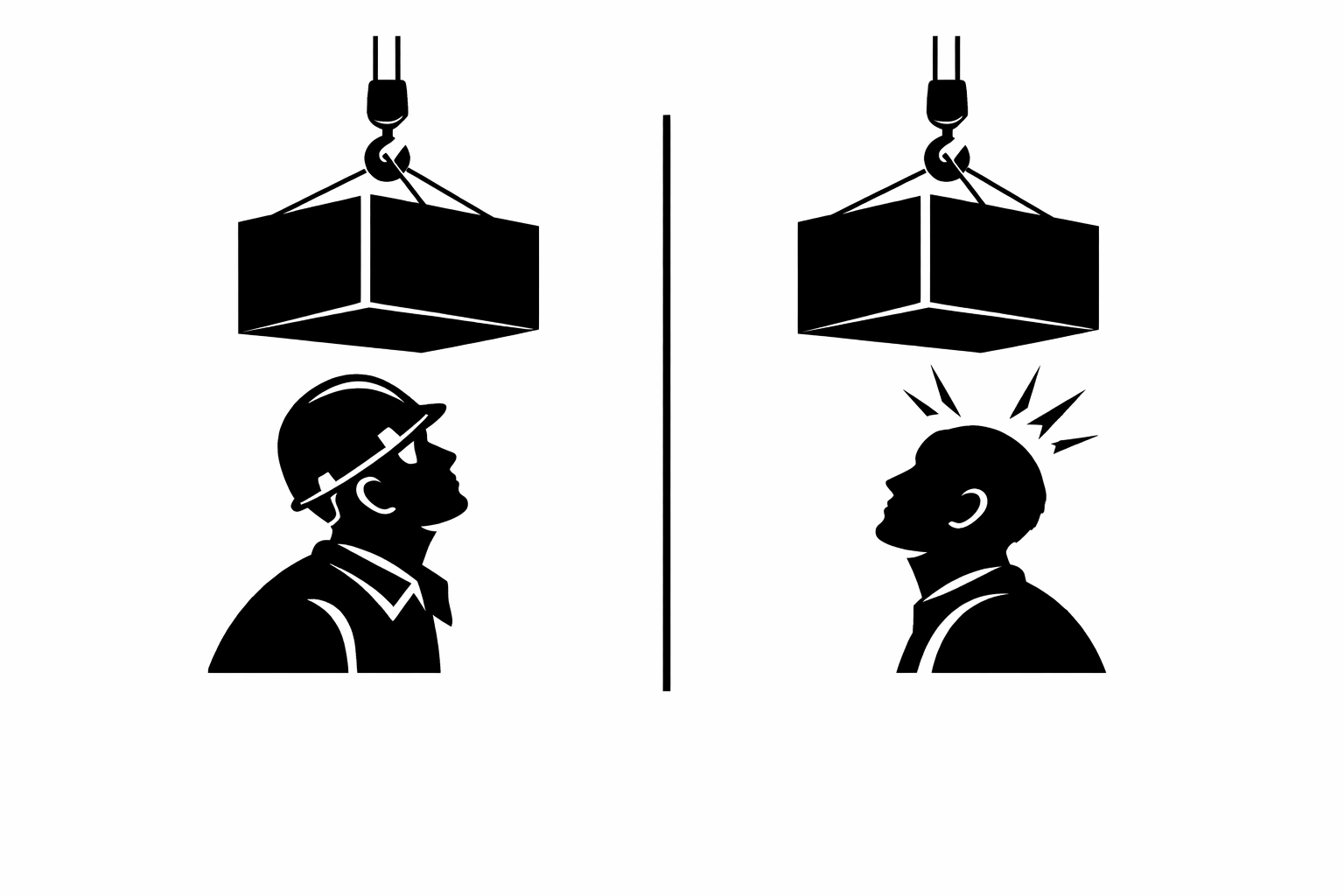
Hard hats to BS EN 397 cover most general construction. BS EN 14052 is the upgraded standard for industrial side-impact and is what you want near working at height, lifting operations or anywhere falling objects are a real risk. Replace every 5 years from manufacture date even if it looks fine (the date is moulded inside the shell, look for it). Replace immediately after any impact. Chinstrap on whenever you're working at height, on scaffold, in wind, or where the helmet can come off. If you take it off to wipe sweat, you take the protection off too. Don't put stickers on the shell that hide cracks.
The eyes: glasses, goggles or face shield
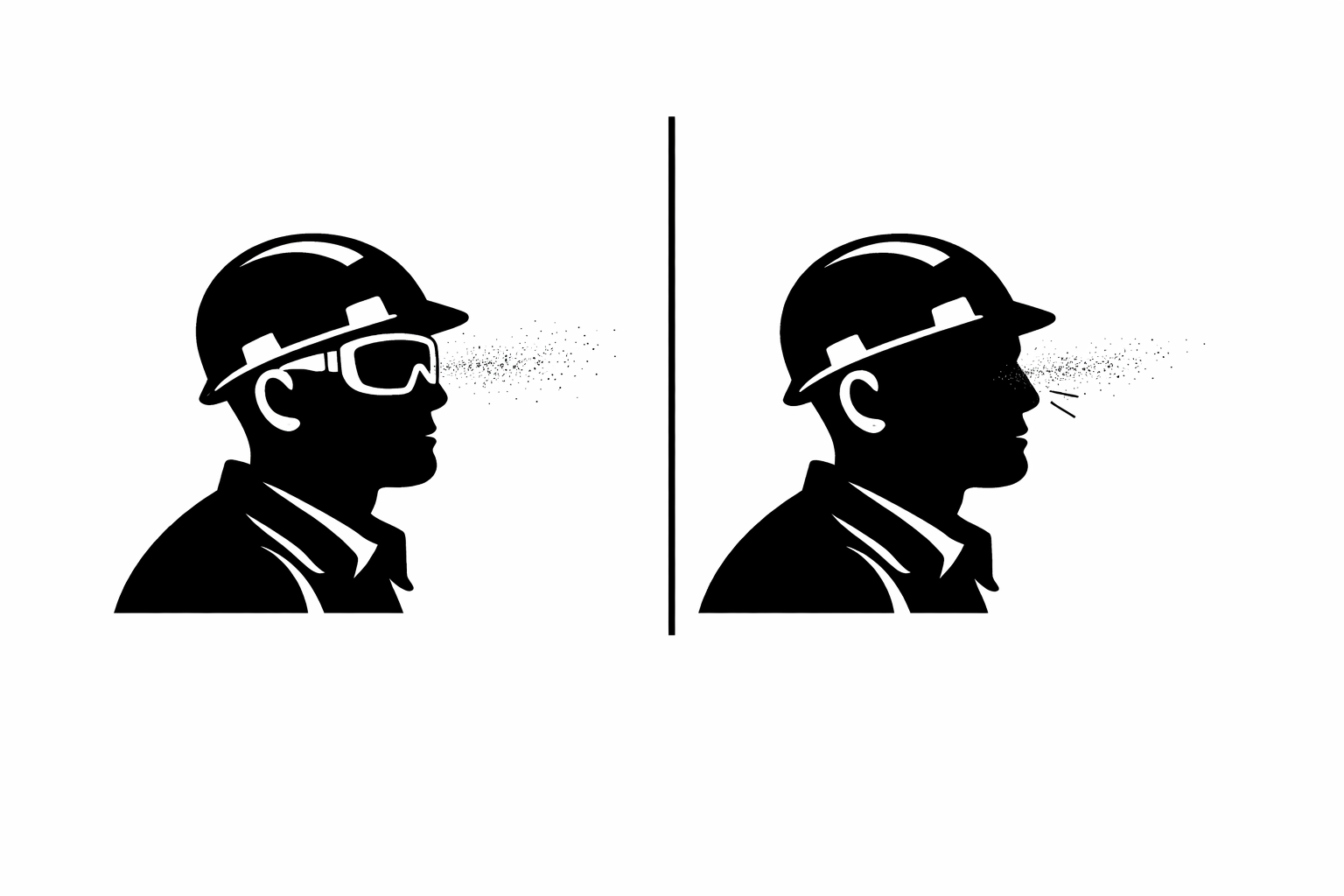
Three levels. Safety glasses to BS EN 166 for general work. Goggles when there's airborne dust or splash (cutting, grinding, chasing walls, mixing chemicals). Full face shield over goggles for grinding, disc cutting and anywhere debris flies hard. Don't push them up onto your forehead and forget you're working. Don't take them off because they fogged up; anti-fog wipes cost nothing and you keep your eyes. If you wear prescription glasses, get over-glasses or prescription safety lenses; standard specs are not impact-rated.
The lungs: dust masks vs proper RPE
This is the area most operatives get wrong. A paper dust mask from the supermarket is not PPE; it stops nothing dangerous. For nuisance dust you need at least an FFP2. For silica, asbestos, wood dust or anything that could give you long-term lung damage you need FFP3 minimum. Tight-fit masks only work clean-shaven and face fit tested by a competent fit tester. Stubble breaks the seal. A two-day beard means the mask is decorative. If you can't or won't shave, the alternative is a powered air respirator (PAPR), which is more comfortable anyway. See the separate silica talk for the detail.
The hands: gloves rated for the task
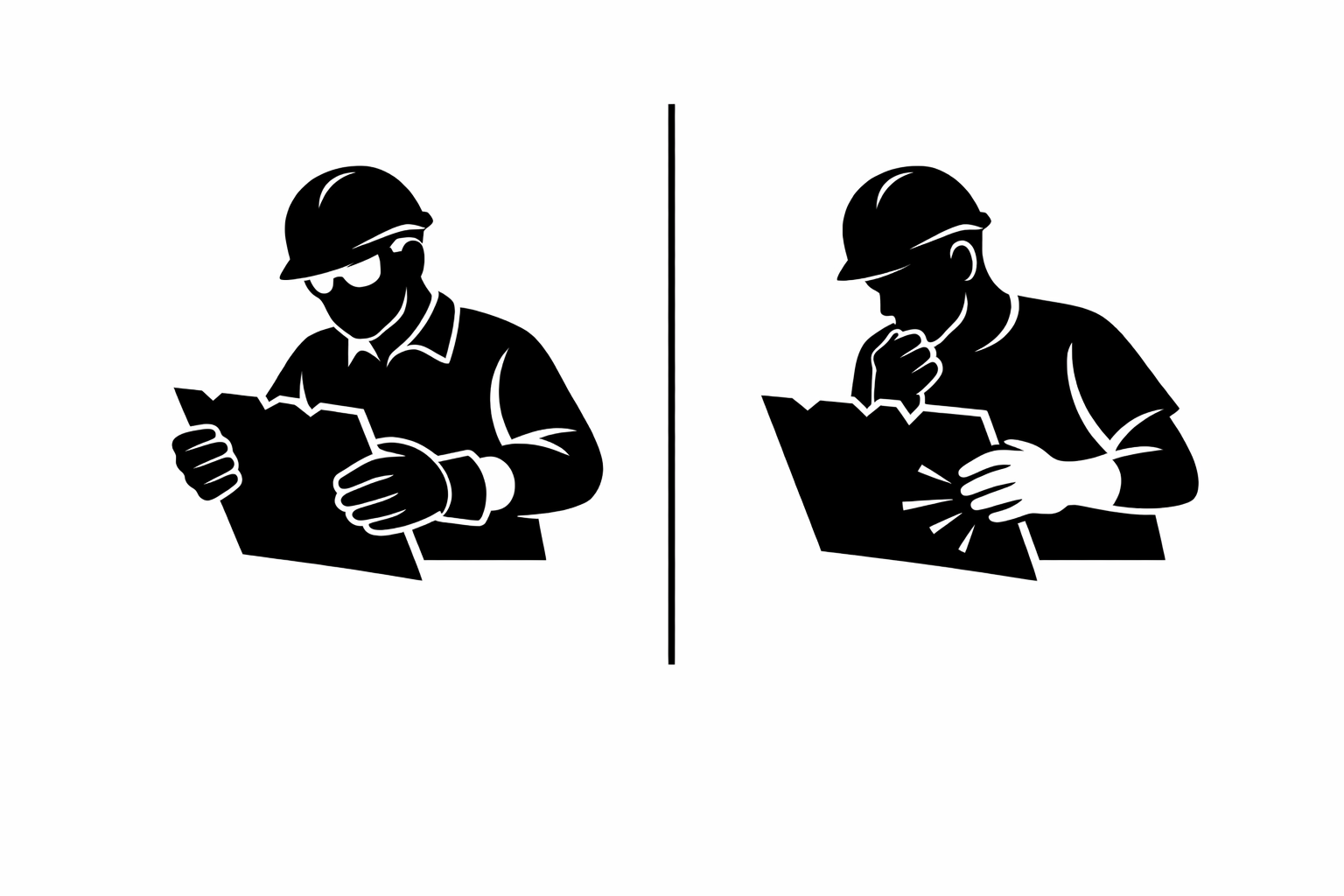
Gloves aren't gloves. EN 388 covers mechanical hazards (cuts, tears, punctures) and rates each from A to F. Level A is paper, level F is what you need for cutting kerbs or handling sharp sheet. EN 374 covers chemicals (think solvents, fuel, epoxy). EN 407 covers heat. Pick the rating for the job, not the comfortable pair you wore yesterday. Cut-resistant when handling block, sheet metal, rebar or anything with a sharp edge. Chemical-resistant when handling diesel, solvents or wet cement (cement burns are slow and serious). Don't wear loose gloves near rotating tools; entanglement risk.
The feet: real safety boots, not work shoes
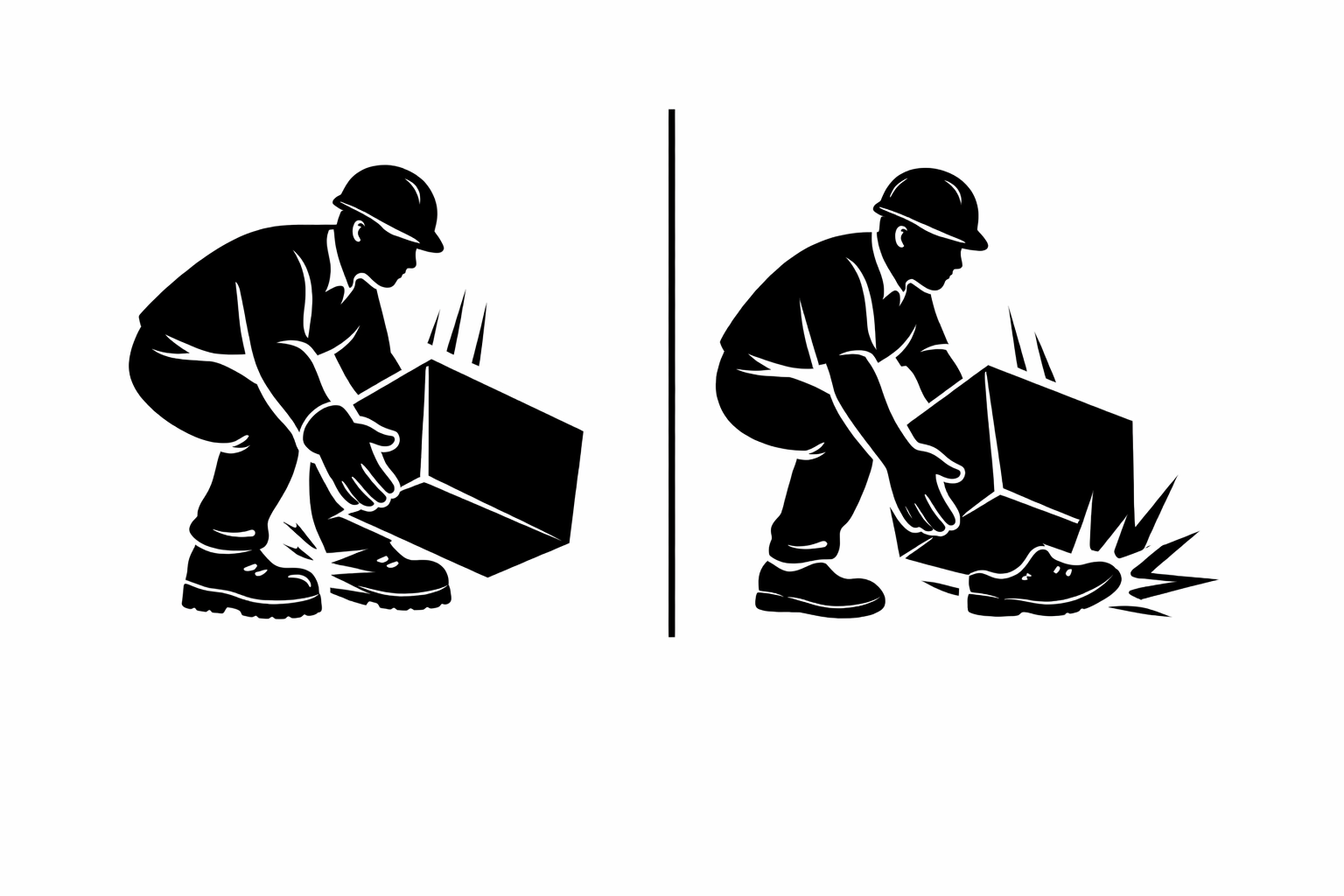
BS EN ISO 20345 is the standard. S3 is the working minimum on a UK construction site: steel or composite toecap (200 joules), midsole protection (puncture resistance from nails through the sole), water-resistant upper, energy-absorbing heel. S5 adds wellington-style for wet ground and ground-water work. Composite toecaps are lighter and don't conduct cold; steel is cheaper. Both work. Replace when the sole is worn smooth, when the upper splits, or when the toecap shows through. Trainers with steel toes from a high street shop are not site-rated; check the standard.
The ears: hearing protection where it's needed
When site noise is above 80 dB(A) as a daily average, hearing protection has to be made available. Above 85 dB(A) it has to be worn. Use the SNR rating on the box to choose: too low and noise still damages your hearing, too high and you can't hear shouted warnings or reversing alarms (which is its own hazard). Disposable plugs for short tasks, banded plugs or muffs for full shifts. Don't wear earphones with music as hearing protection; music isn't rated and isolates you from site comms.
Condition checks at start of shift
PPE only works if it's not damaged. Check at the start of every shift: hard hat shell for cracks, harness webbing for fraying or chemical damage, glove integrity, boot sole tread, mask straps. Damaged kit gets replaced before work starts, not after. Tell the supervisor; the cost of a new pair of gloves is a fraction of an injury claim. Keep PPE clean: dirty hi-vis stops being hi-vis, blocked dust masks don't seal, sweaty mask straps perish faster.
What the supervisor should be actively spotting on walk-arounds.
Ask one or two of these at the end. Confirms attention more than a silent nod.
Need site-specific RAMS for the job this talk is about?
A toolbox talk is generic by design. It works on every site. Your RAMS isn't. Briefkit writes a site-specific RAMS for your actual job: the hazards, sequence, PPE, competencies and emergency arrangements that apply to this work, at this address, by this team. £30 per document.
Order a RAMS for £30 →