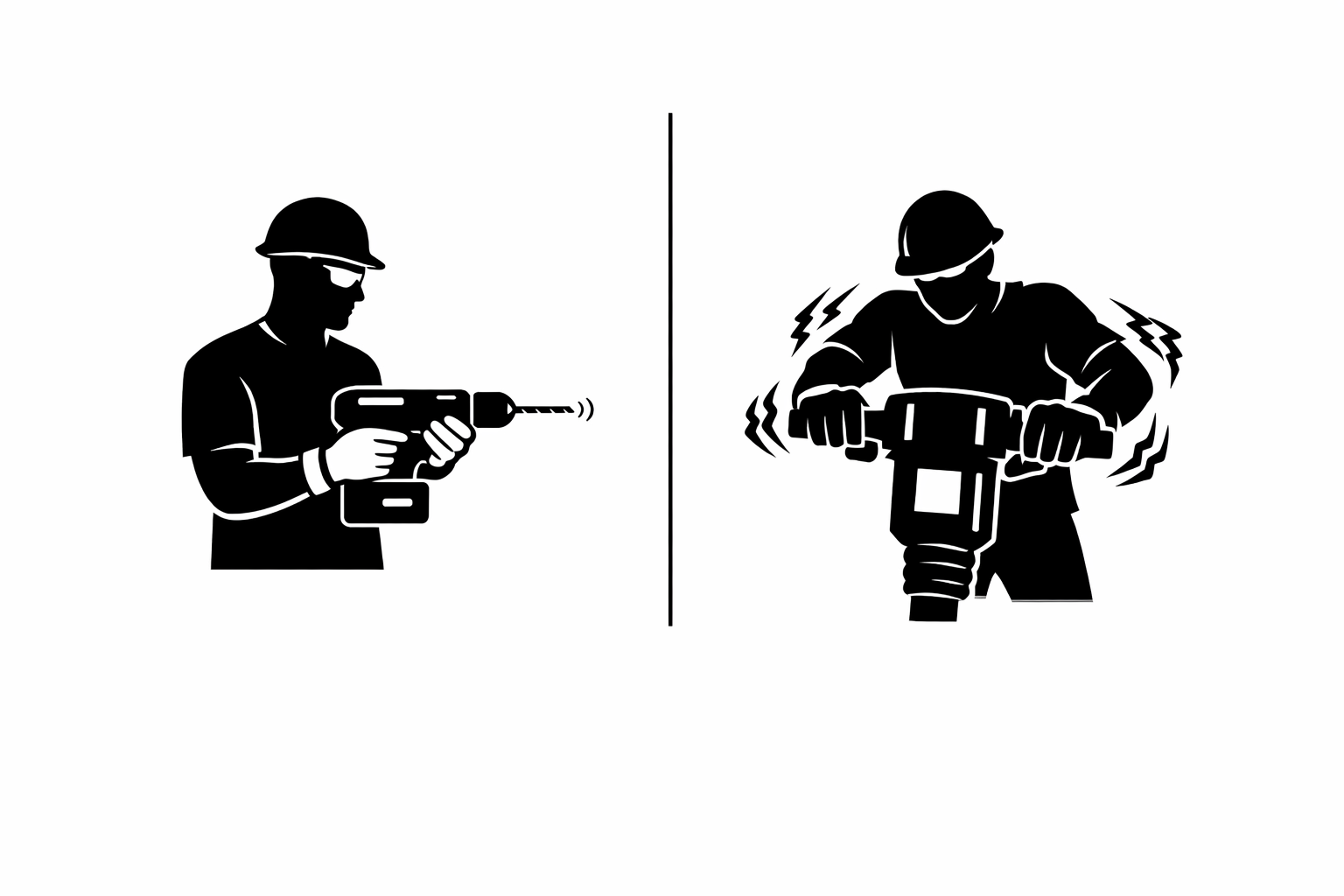
A ready-to-deliver toolbox talk for foremen and supervisors. 8-10 minute spoken script plus briefing register for operative sign-in.
Tingling fingers at the end of a shift aren't normal. Cold hands that take ten minutes to warm up at home aren't normal. Numb fingertips when you wake up aren't normal. They're the early signs of Hand-Arm Vibration Syndrome, and once the damage is done it doesn't reverse. HAVS ends careers in construction and the operatives who get it almost always saw the warning signs and didn't tell anyone. This is the talk that gets the symptoms named and the controls in place before someone loses the use of their hands.
Why it matters
The Control of Vibration at Work Regulations 2005 require employers to assess vibration exposure, eliminate or reduce it, monitor trigger time, provide health surveillance, and remove operatives from exposure if they develop symptoms. The HSE prosecutes HAVS cases regularly because the damage is preventable and the duty is clear. HAVS is permanent. Once nerves and blood vessels are damaged, they don't grow back. We're not just protecting careers, we're protecting operatives' ability to hold a cup of tea at 60.
Spoken script for the supervisor. Read or paraphrase, in order.
What HAVS actually is
Hand-Arm Vibration Syndrome is permanent damage to the nerves, blood vessels and joints of the hands, wrists and forearms caused by repeated exposure to vibration from power tools. Three things happen: vibration white finger (fingers go white and numb in cold conditions, blood flow stops, sometimes painfully); sensory neuropathy (loss of feeling in fingertips, can't feel small objects, can't do up buttons); and reduced grip strength (you can't hold things you used to hold). All three are progressive, all three are irreversible once established, and all three start with symptoms the operative usually ignores for years before they get diagnosed.
The two numbers: EAV and ELV
Vibration exposure is measured in metres per second squared (m/s²) averaged over an 8-hour day. Two thresholds to know. EAV (Exposure Action Value) is 2.5 m/s² A(8). Hit this and we have to put controls in place, monitor exposure, and provide health surveillance. ELV (Exposure Limit Value) is 5.0 m/s² A(8). This is a hard ceiling that exposure must not exceed. Most heavy tools (breakers, chainsaws, large angle grinders) hit the EAV in under an hour and the ELV in under two. The boring tools (cordless drills, palm sanders) might not hit EAV all day. The HAVS exposure chart for each tool tells you the trigger time per tool, and that's what you actually monitor.
Trigger time and the HAVS chart
What we monitor isn't the calendar time you held the tool. It's the trigger time: time the trigger is actually pressed and the tool is actually running. Three minutes of running drill plus seven minutes of setting up the next hole is three minutes of trigger time, not ten. Every site should have a HAVS exposure chart per tool showing manufacturer-stated vibration magnitude and the trigger time to EAV and ELV. Operatives record trigger time on a HAVS chart per shift, and they swap off the tool as exposure approaches EAV. Not when they hit it. As it approaches.
The hierarchy: lower vibration tools first, gloves last
First control is eliminating the task. Can the work be done without a vibration tool at all? Sometimes yes. Second is using a lower-vibration tool for the same job. The same hole drilled with a modern brushless SDS drill produces a fraction of the vibration of an old corded breaker. Third is maintenance: blunt drill bits transfer more vibration than sharp bits; worn bearings on a grinder shake more than new bearings. Fourth is admin: rotate operatives, schedule heavy work for short sessions, take genuine breaks. Last is PPE: anti-vibration gloves to BS EN ISO 10819 reduce some frequencies but not the ones that do the most damage. The honest truth is they help mainly by keeping hands warm (cold hands are more vulnerable). Don't rely on gloves to keep you under the EAV.
Early symptoms — what to tell us about
Most HAVS cases were diagnosed years after the operative first noticed something was wrong. The symptoms to report straight away: tingling in fingers during or after using vibration tools; numbness in fingertips, especially in cold weather; fingers turning white in cold (any episode counts, doesn't have to be all five fingers); reduced grip strength that's appeared since you started this kind of work; pain in hands, wrists or forearms that gets worse with vibration tools. Any of those, you tell us today. Not next week, not when it gets worse, today. We arrange a referral for health surveillance and we change your job until the assessment is done. Reporting early is what keeps you working.
Health surveillance — what the employer has to do
Anyone regularly exposed to vibration above EAV must be on a health surveillance programme. That means a baseline questionnaire, an annual standardised questionnaire by a competent person (typically an occupational health nurse), and tier 3-5 medical examinations if symptoms develop. If health surveillance flags a problem, the operative is removed from vibration exposure (assigned to other work) until properly assessed, and may be permanently removed from that kind of work. This isn't optional and it isn't punishment. It's the law, and it's what protects your career.
The cold makes it worse
Vibration damage is amplified by cold. The same exposure that's manageable in July does more damage in January because cold restricts blood flow and the nerves and vessels are more vulnerable. UK construction sites in winter are exactly the worst case. Mitigation: keep hands warm with proper gloves between tasks, warm rest breaks in the welfare unit, schedule the heavy vibration work for milder weather where you can. Vibration white finger episodes happen far more in winter, and once they start the operative is much more susceptible to them in future.
Smoking, caffeine and HAVS
Two lifestyle factors known to increase HAVS risk: smoking and high caffeine intake. Both restrict blood flow to the fingers. Operatives who smoke heavily and use vibration tools develop HAVS faster than those who don't. Not telling anyone to quit smoking on a toolbox talk, but if you have early HAVS symptoms, cutting down on smoking and caffeine is one of the few things you can do yourself that genuinely helps.
What the supervisor should be actively spotting on walk-arounds.
Ask one or two of these at the end. Confirms attention more than a silent nod.
Need site-specific RAMS for the job this talk is about?
A toolbox talk is generic by design. It works on every site. Your RAMS isn't. Briefkit writes a site-specific RAMS for your actual job: the hazards, sequence, PPE, competencies and emergency arrangements that apply to this work, at this address, by this team. £30 per document.
Order a RAMS for £30 →