A ready-to-deliver toolbox talk for foremen and supervisors. 8-10 minute spoken script plus briefing register for operative sign-in.
Getting in and out of the van is the most repetitive movement most operatives do all day. Twenty times a shift, every shift, every week. The result is one of the most common injury patterns on UK construction sites and one of the least talked about: twisted ankles, blown knees, sprained wrists, and the occasional broken hip from a worker who fell out of a moving vehicle because someone didn't pull the door to. The fix is boring habits done consistently. This is the talk that turns the habits on.
Why it matters
Vehicle egress and ingress injuries are one of the top causes of lost-time injury for UK trades operatives. The HSE doesn't separate these out in their published stats, but insurer claims data and prop firm fleet operators consistently report them as a leading category. The Driving for Better Business and National Highways campaigns specifically target vehicle safety because the work van is where small operatives spend more time at risk than at any single workstation. CDM 2015 covers vehicle movements on site; the Provision and Use of Work Equipment Regulations 1998 covers the van itself as work equipment.
Spoken script for the supervisor. Read or paraphrase, in order.
Why this is a real hazard, not a joke
Operatives roll their eyes when you bring up van safety because it sounds soft. The numbers say otherwise. Going in and out of the van 20 times a shift means 100 chances per week per operative to land badly. A twisted ankle that takes 4-6 weeks to heal properly costs a week of work, a course of physio, and often leaves a long-term weakness that catches up at 50. A blown knee from a bad step is a year off and sometimes a career-ender. We're not asking you to be careful for the sake of it; we're asking you to be careful because the bloke who isn't is the one we visit in hospital.
Three points of contact, every time
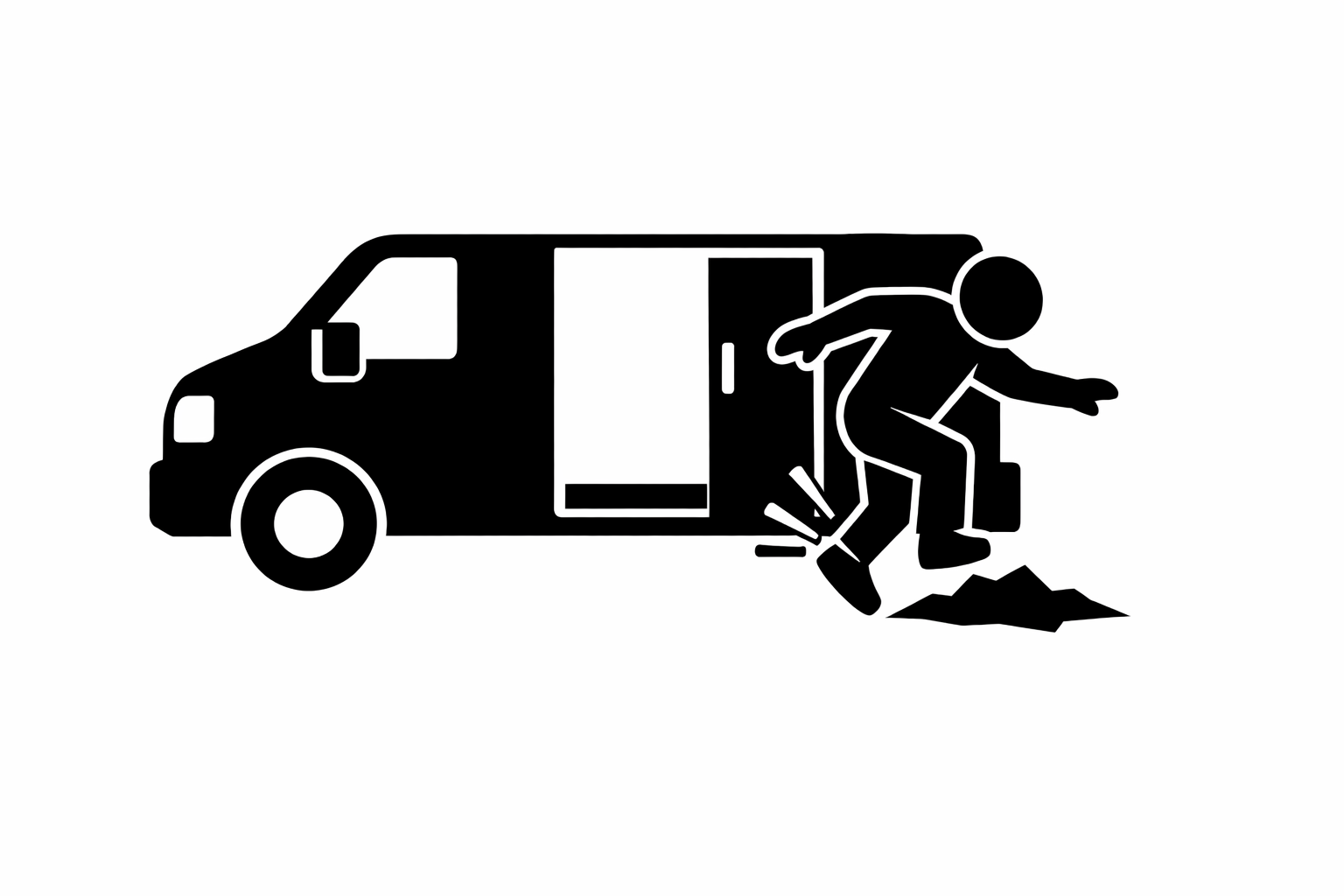
Same rule as ladders. Two hands and a foot, or two feet and a hand, in contact with the vehicle at all times. That means: grab handle on the way in. Grab handle on the way out. Step plates used as steps, not as launch pads. Never jump down. Never carry tools or materials in both hands while exiting. Tools come out after you do. If the grab handle is missing or broken, the vehicle gets reported and not used until it's fixed.
Where you park matters
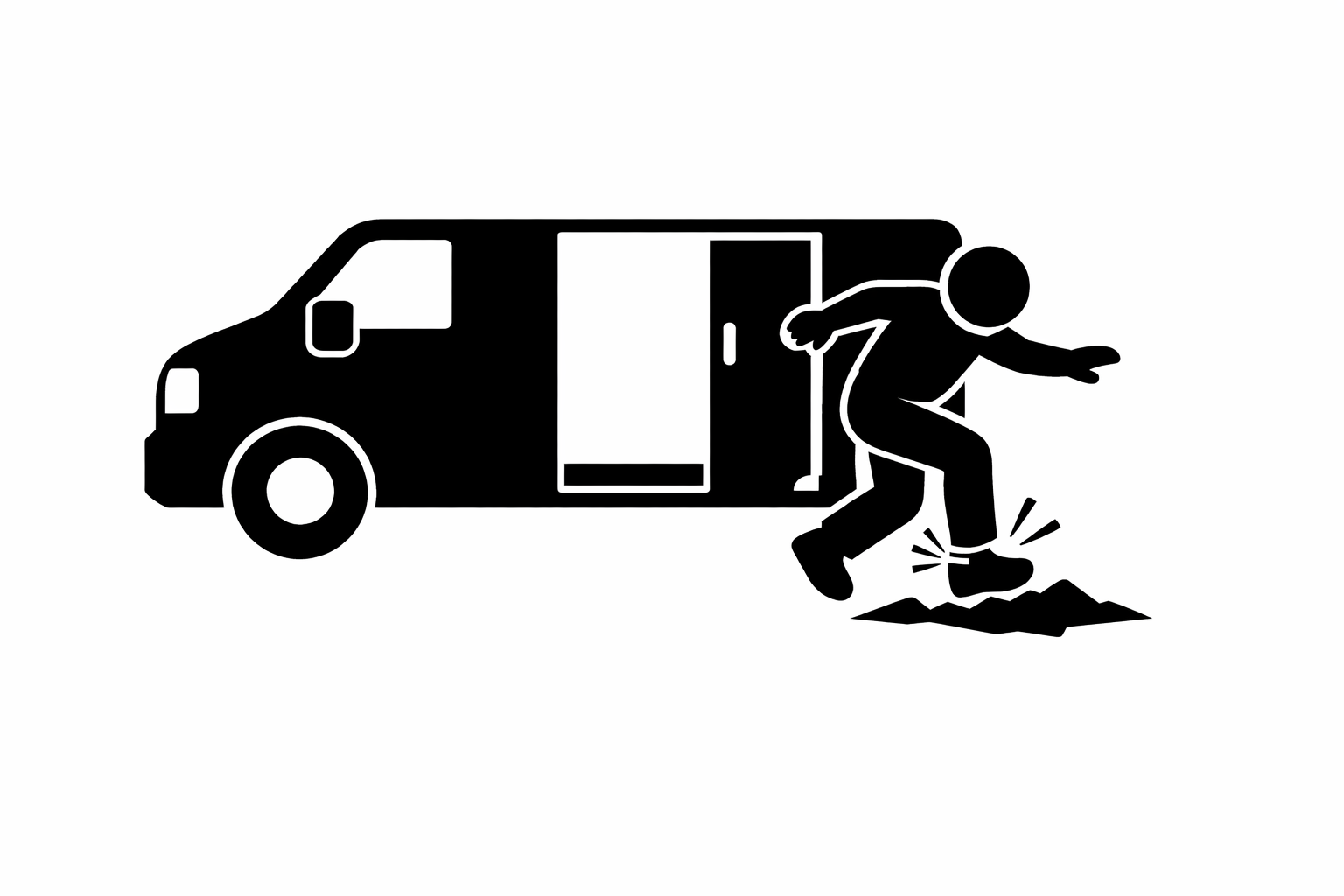
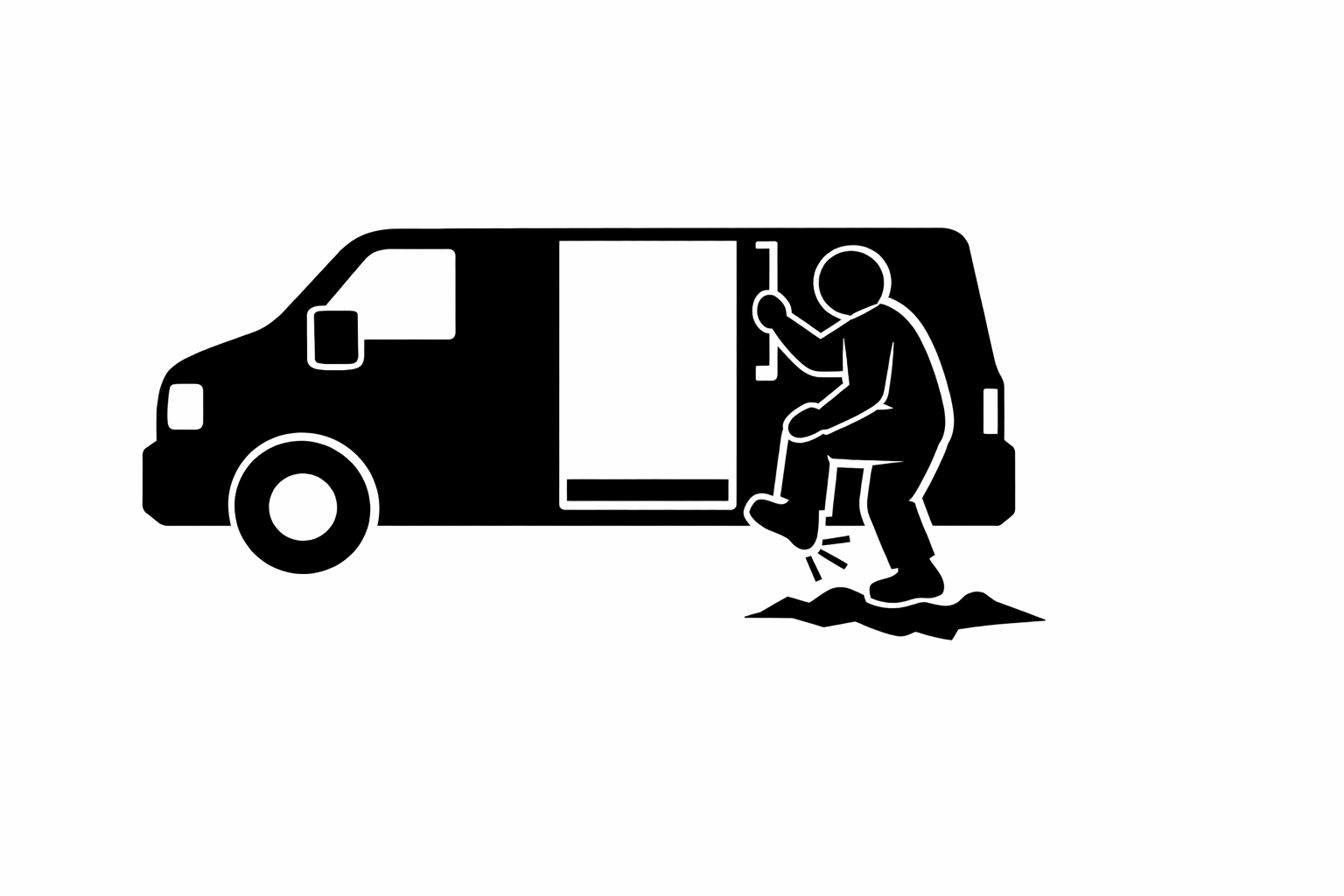
Half the ankle injuries from getting out of vans happen because of where the van is parked, not how the operative climbed out. Park on level ground where you can. Avoid parking with the side door over a kerb, a drain cover, a pothole, or a pile of rubble. If the ground is uneven and you can't avoid it, get out of the front passenger or driver door onto the better surface, even if it's a longer walk to the back of the van. Reverse-park on arrival so the doors open onto the safe side, away from the carriageway, away from operating plant, away from the slope.
Carrying tools in and out
The classic ankle injury: operative steps down from the side door with a bag of tools in each hand, lands awkwardly because they can't use the grab handle, ankle goes over. The fix is the boring one: get out empty-handed first, then lift the tools out from a stable stance with both feet on the ground. Coming back to the van? Tools go in first, then you climb in clean. Five seconds of extra time, a career of working ankles.
Door discipline
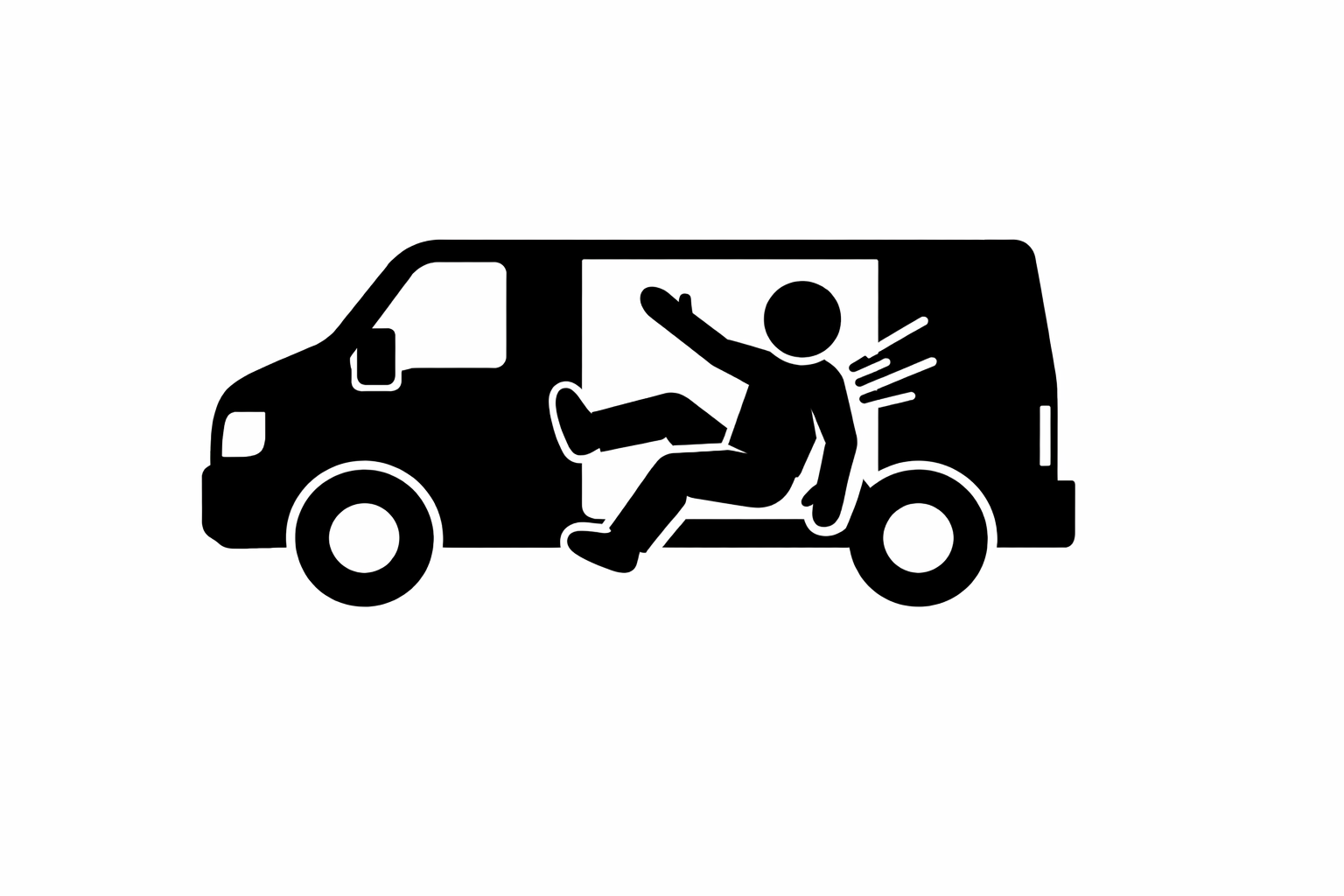
Side doors closed and latched before the van moves. Always. Sliding side doors on Transits and Vito-style vans don't lock from the inside by default; they need to be pulled fully closed until the latch clicks. A door that's not latched can swing open at the first roundabout, and the operative leaning against the inside of it ends up on the road. The 'cab driver does the doors' habit fails the first time someone forgets. Get into the habit yourself: door closed, latched, second check before pulling away.
Boots that grip, weather that doesn't
Safety boots with worn-smooth soles are the single biggest contributor to vehicle egress injuries. The same boots that worked fine in July are an ice rink in December. Check the sole tread at start of every shift, especially in winter. Boots with visible bald patches get replaced. Step plates and kerbs are extra slippery in frost, after rain, when there's diesel or hydraulic fluid spilt on them. Slow down in winter; the bloke who steps down the same way at the same speed in January as he did in August is the bloke we drive to A&E.
Stepping out onto a live carriageway
The other van injury pattern is being clipped by a passing vehicle while stepping out of the van. Always check the mirror before opening the driver's door. Always open the door wide enough to look round it before stepping out. On busy roads, get out of the kerb side wherever possible, even if it means walking round the van. Hi-vis Class 3 on before you open the door, not after. If you've parked badly enough that exiting safely isn't possible, move the van. The 30 seconds of repositioning is cheaper than the air ambulance.
The reversing-into-parking-bay problem
Site rule for company vans should be: reverse-park on arrival, forward-out for exit. Reasons: when you arrive, you're alert, you have time, the parking bay is empty so you can see it. When you leave, you're tired, you want to get home, the bay might be flanked by other vans that arrived after you. Reverse-parking on arrival removes the worst-case reversing manoeuvre from the end of the day when you're least sharp. It also means the doors open onto the safe side (away from traffic) by default.
What the supervisor should be actively spotting on walk-arounds.
Ask one or two of these at the end. Confirms attention more than a silent nod.
Need site-specific RAMS for the job this talk is about?
A toolbox talk is generic by design. It works on every site. Your RAMS isn't. Briefkit writes a site-specific RAMS for your actual job: the hazards, sequence, PPE, competencies and emergency arrangements that apply to this work, at this address, by this team. £30 per document.
Order a RAMS for £30 →