A ready-to-deliver toolbox talk for foremen and supervisors. 8-10 minute spoken script plus briefing register for operative sign-in.
Manual handling injuries are the most common cause of lost-time accidents on UK construction sites. They build up slowly. The bag of plaster that wasn't quite heavy enough to bother with a trolley. The lintel lifted solo because the second man was on his break. Six months later it's a referral to physio and a man off the tools. This talk is the script a supervisor needs to brief the team on lifting properly, when to ask for help, and when to put it on a wheel.
Why it matters
The Manual Handling Operations Regulations 1992 require us to avoid hazardous manual handling where reasonably practicable, and assess the risk of what's left. Around a third of all reported workplace injuries in construction are linked to manual handling. Most are backs, shoulders and knees. Most don't get fixed. They get managed for the rest of someone's working life.
Spoken script for the supervisor. Read or paraphrase, in order.
What we try first: don't lift it
First question is always: do we have to lift this at all? Can we wheel it? Can we get the wagon closer to the drop point? Can we break a pallet down where it lands? Manual lifting is the last option, not the first. If there's a sack truck, pump truck, telehandler or Hiab on site, that's what moves the heavy stuff. Walking 30 metres for a trolley beats six months off with a slipped disc.
TILE: what to think about before you bend down
Task, Individual, Load, Environment. Task: what are you actually doing? Lifting, carrying, twisting, holding it for how long? Individual: are you the right person? Fit, trained, not knackered from the last job? Load: what does it weigh, where's the centre of gravity, is it stable? Environment: floor wet, route clear, lighting OK, anywhere to set it down halfway? Three seconds of thinking saves three months of physio.
How to lift one: the actual technique
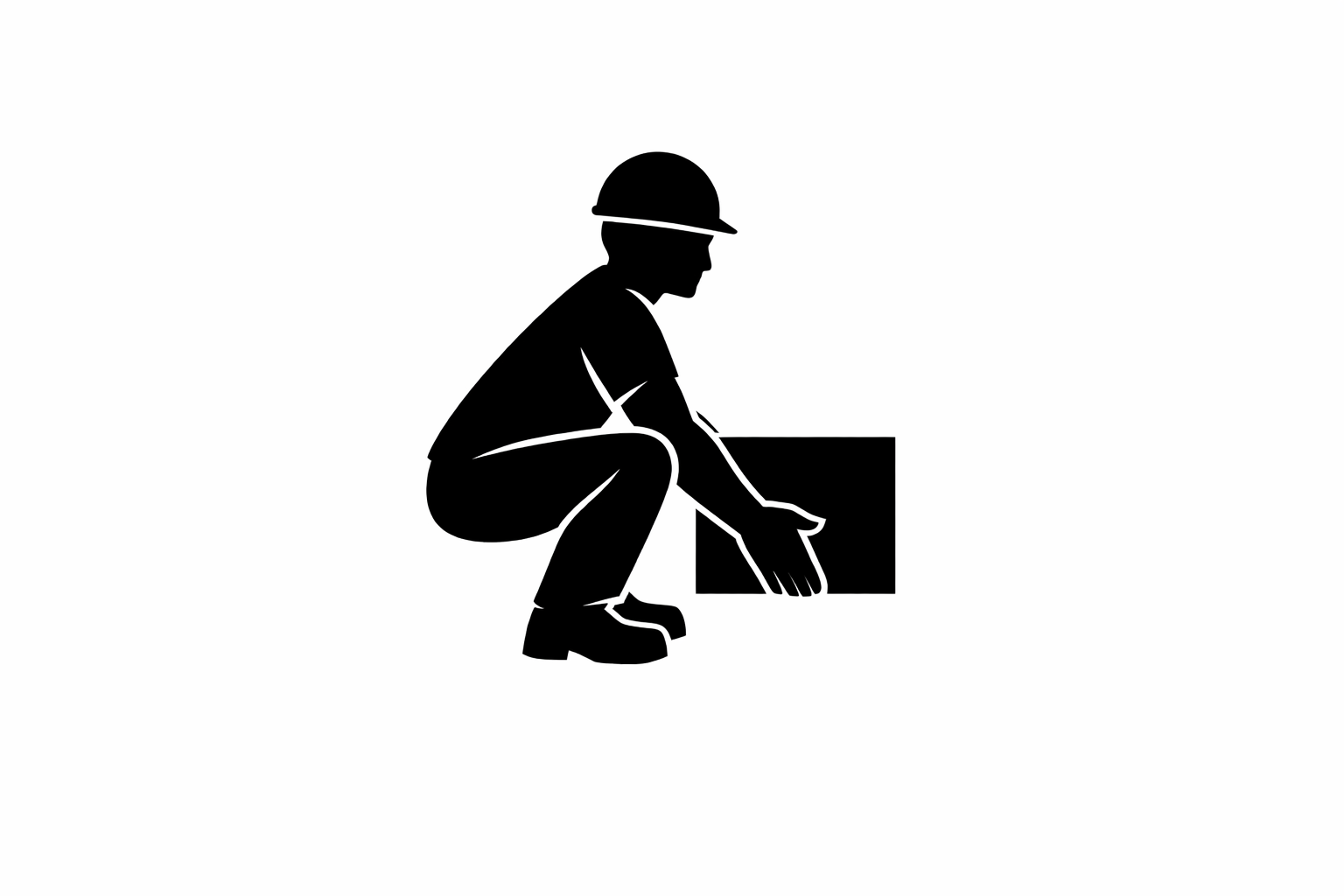
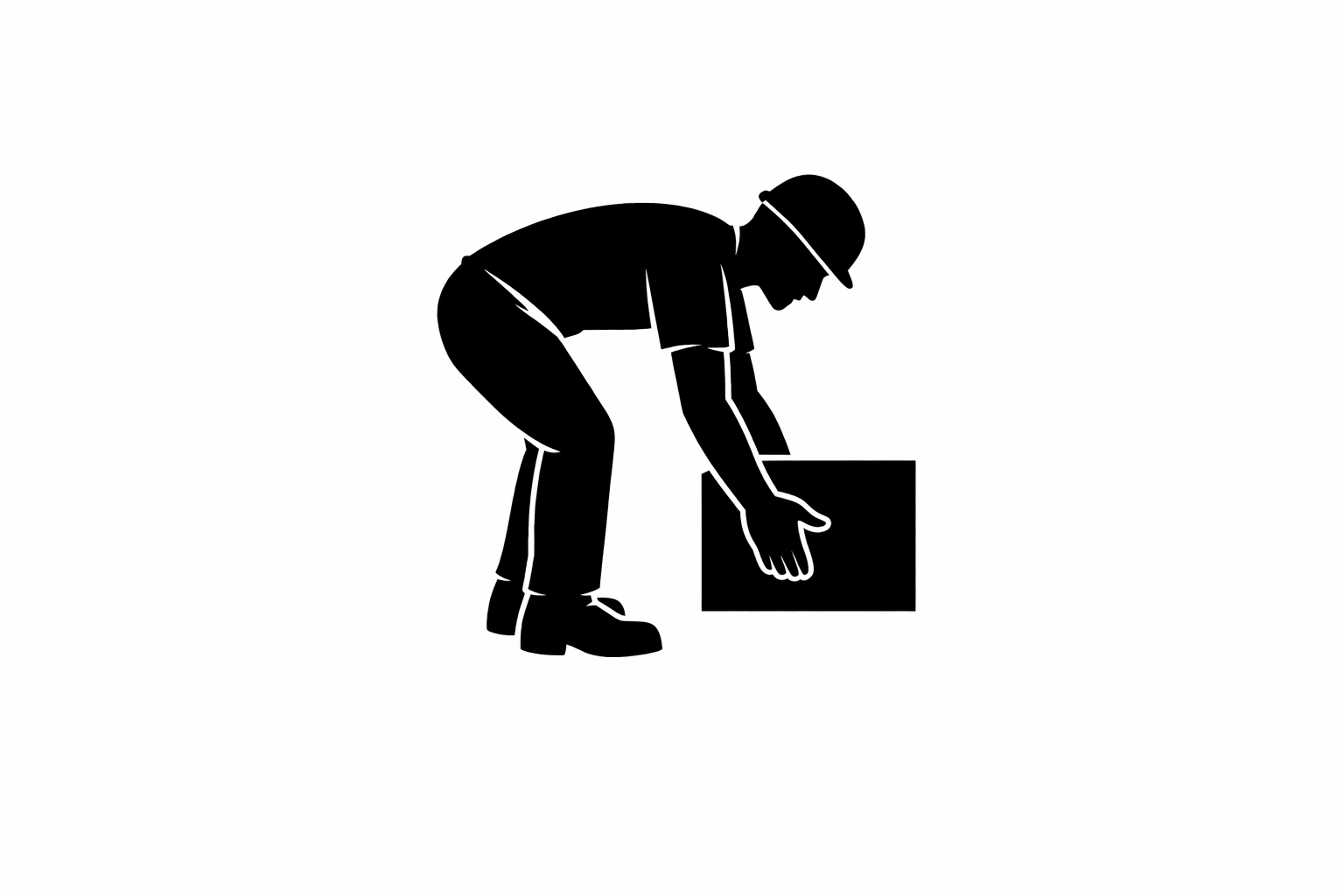
Feet shoulder-width, one slightly forward. Bend the knees, not the back. Get a firm grip with your palms, not just fingertips. Keep the load close to your body. Lift smoothly using your legs. Head up, back straight. Don't twist while you're lifting. Turn with your feet. To put it down, reverse the same way. If you have to read this twice, it means we've been getting it wrong.
Team lifts: when and how
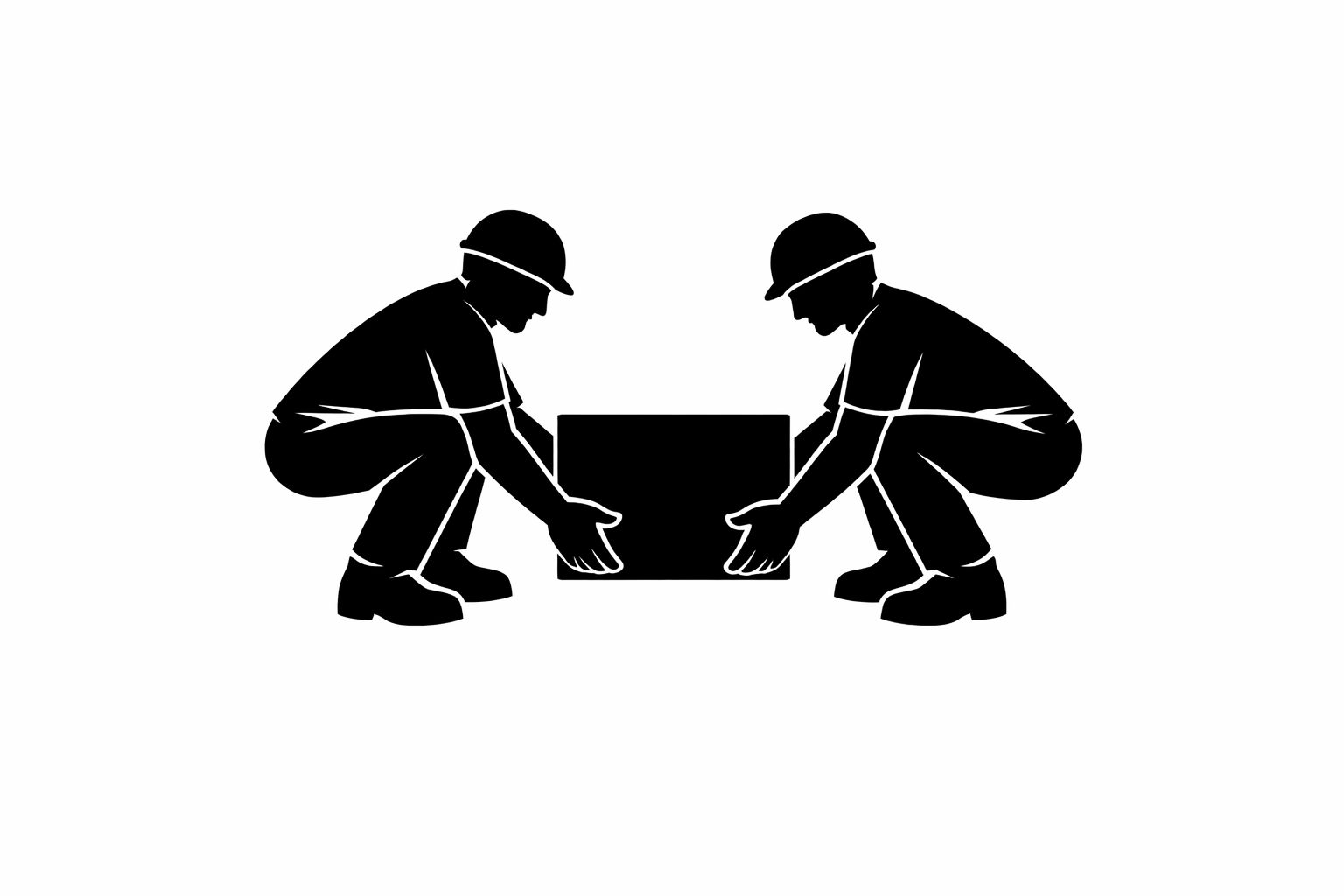
Anything over 25kg for a man, 16kg for a woman, or anything awkward, it's a two-person lift. Both face the same way. Decide who's calling it before you pick it up ("on three, lift") and both lift on the same count. Same pace walking. Same person calls the set-down. If you're carrying a long load like a lintel or a section of duct, one at each end, the man at the back follows the man at the front, not the other way around.
Repetitive lifting: the silent one
Most manual handling injuries on site aren't one heavy lift. They're the same medium lift done two hundred times. Bricks all morning. Bags of muck off the wagon all afternoon. Decking boards passed up to the platform all day. Rotate the team. Swap who's on the trolley and who's stacking. Take a proper break every couple of hours, not when you collapse. If it hurts the next morning, tell us.
If you feel it go
If something pulls, stops, or pings while you're lifting, stop. Don't finish the lift, don't tough it out, don't say nothing. Tell the supervisor straight away. Sit down. We get you assessed. A pulled muscle treated on day one is a week off. A pulled muscle worked through for a fortnight is a year off.
What the supervisor should be actively spotting on walk-arounds.
Ask one or two of these at the end. Confirms attention more than a silent nod.
Need site-specific RAMS for the job this talk is about?
A toolbox talk is generic by design. It works on every site. Your RAMS isn't. Briefkit writes a site-specific RAMS for your actual job: the hazards, sequence, PPE, competencies and emergency arrangements that apply to this work, at this address, by this team. £30 per document.
Order a RAMS for £30 →