A ready-to-deliver toolbox talk for foremen and supervisors. 8-10 minute spoken script plus briefing register for operative sign-in.
Every site has fire extinguishers. Half the team can't tell you which one to grab if a stick welder sets a bag of rags off. Using the wrong one isn't just useless. Water on a chip pan or CO2 on a deep-fat fryer can make the fire worse and put the person holding the extinguisher in hospital. This talk walks the team through the five UK extinguisher types, what each one's for, and the one minute of technique they need to actually use one.
Why it matters
The Regulatory Reform (Fire Safety) Order 2005 puts the responsibility for fire safety on the responsible person on site (usually the PC). That includes making sure operatives know which extinguisher is for which fire. Construction sites are above-average risk: hot works, fuel cans, gas cylinders, timber stacks, polythene, expanding foam. Fire is the most common cause of total site loss in UK construction.
Spoken script for the supervisor. Read or paraphrase, in order.
The classes of fire: what's actually burning
Fires are classified by what's burning, and that decides which extinguisher you grab. Class A is solids: wood, paper, cardboard, timber off-cuts, polythene. Class B is flammable liquids: petrol, diesel, paint, thinners, white spirit. Class C is flammable gases: propane, butane, the gas bottles for the kettle. Class D is metals: magnesium, lithium. Class F is cooking oils, mostly canteen fryers. And electrical isn't a class on its own but it's its own problem. Never put water on something live.
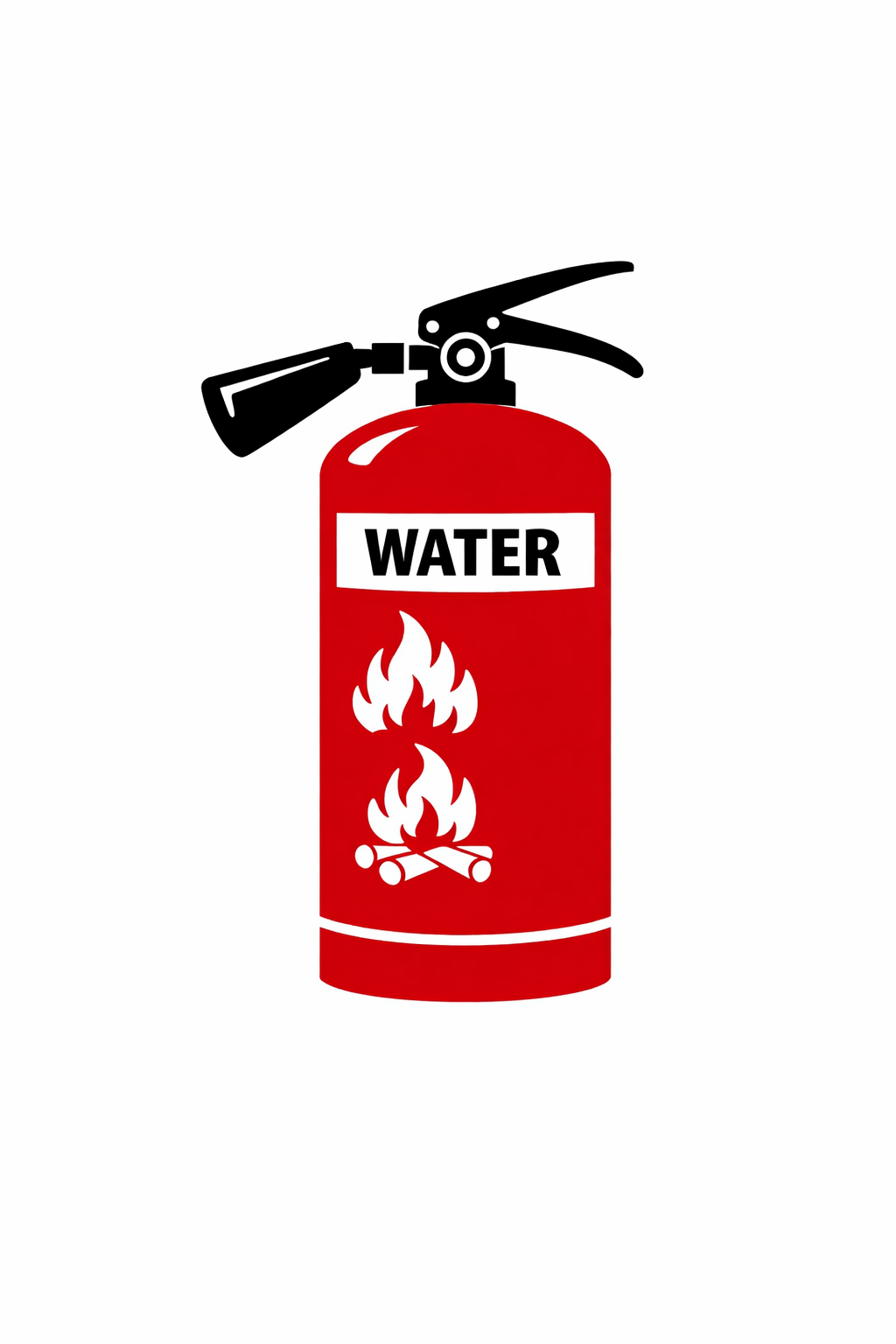
Water: red label
Class A only. Wood, paper, polythene, timber off-cuts. Cheap, plentiful, the default on construction sites. Never put water on electrical, never on a flammable liquid, never on hot cooking oil. Water on a live circuit makes you part of the circuit. Water on chip-pan oil throws burning oil three metres in every direction.
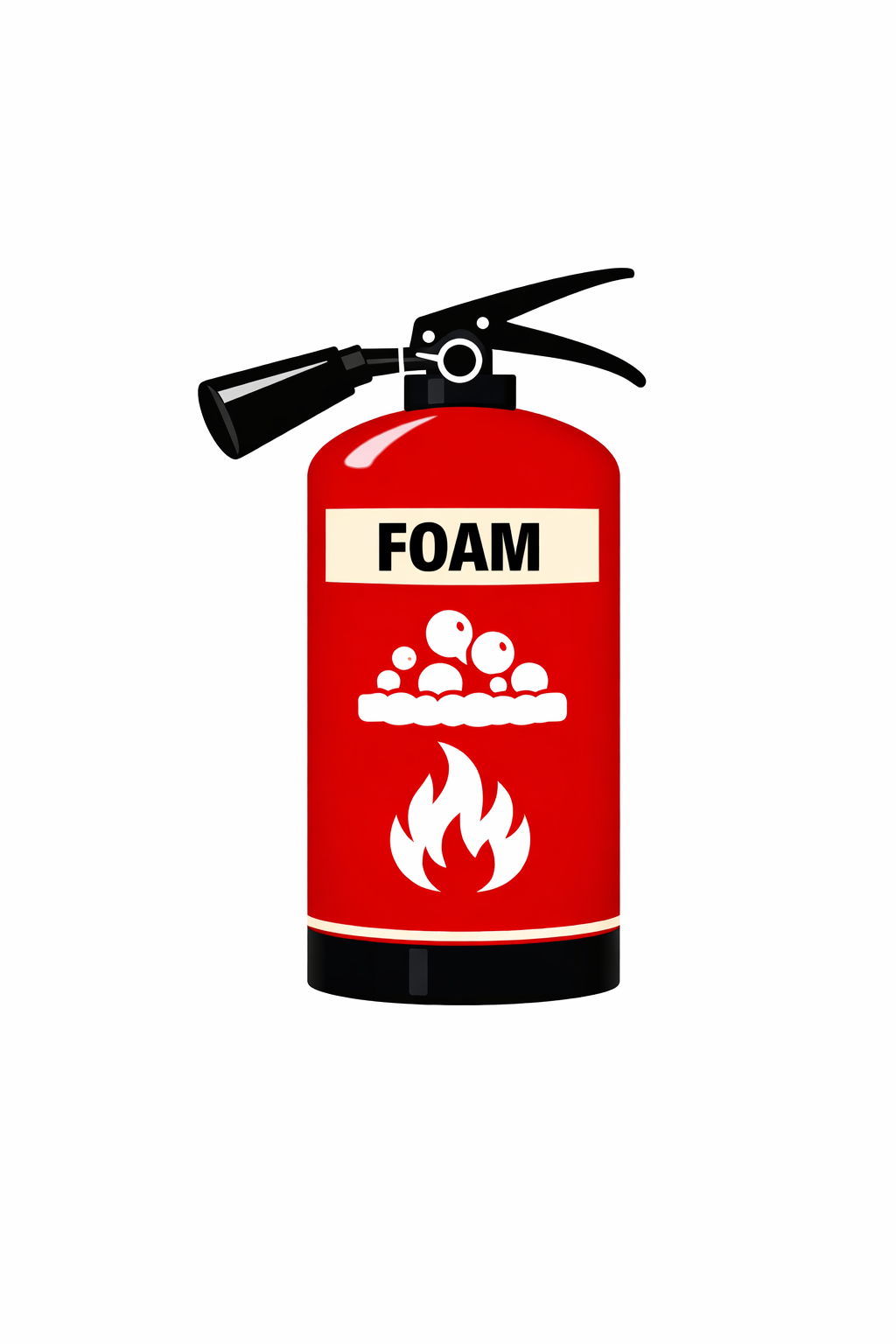
Foam: cream label on red
Class A and Class B. Solids and flammable liquids: diesel spills, paint fires, fuel container fires. The most common extinguisher on a UK construction site because it covers the two most likely fires. Some foam extinguishers are dielectrically tested to 35kV, which means they can be used on electrical if you're a metre back. Check the label. Don't assume.
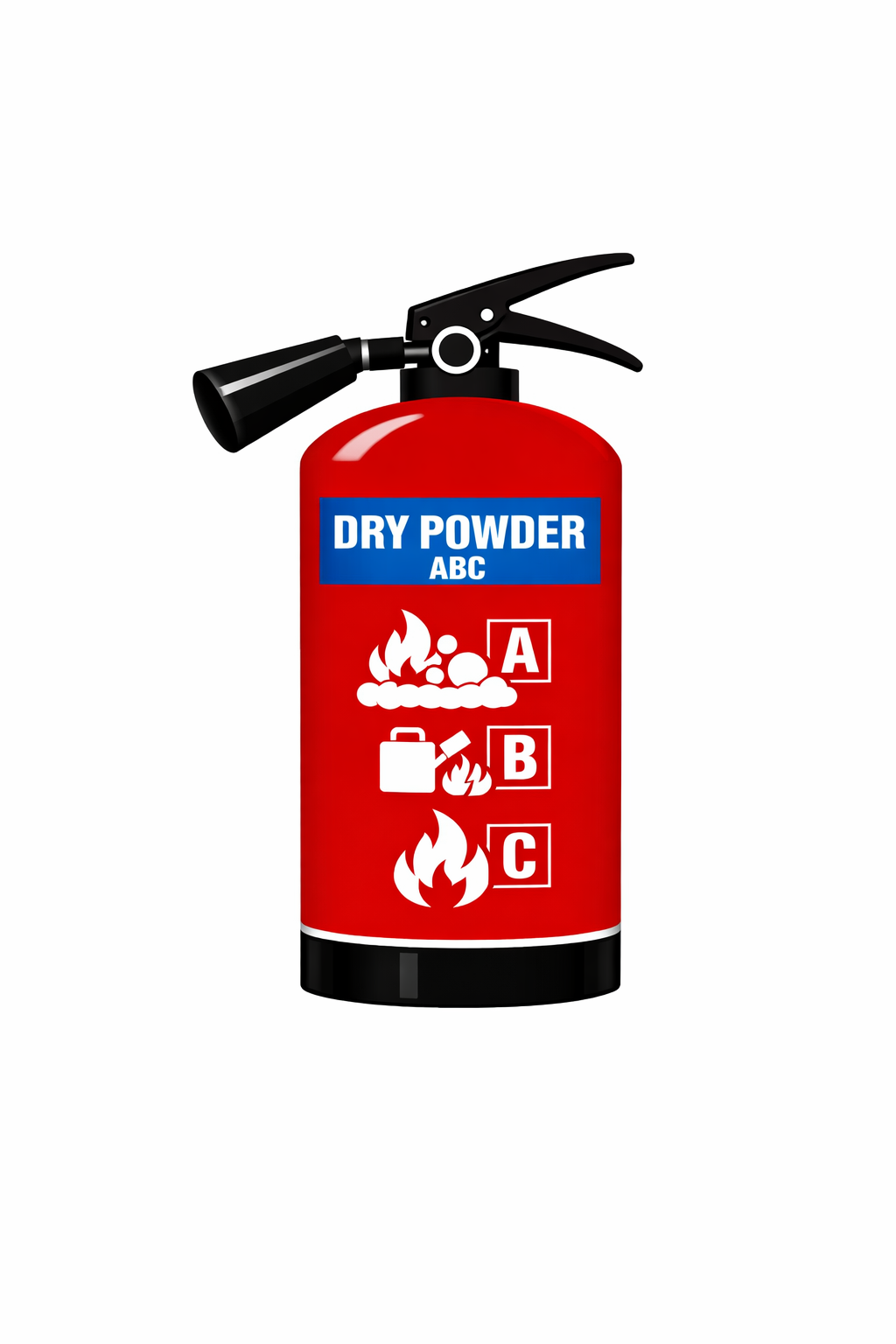
Dry powder ABC: blue label
Class A, B and C, and it'll work on electrical. The most flexible option, and what you'll see by the gas cabinet or the welding bay. Downside: the powder is a respiratory irritant, makes a mess of everything for fifty metres, and damages electronics permanently. Don't grab it for a paper bin if a water one is closer. Outdoors first choice for fuel and gas fires; indoors, last resort because of the visibility loss.
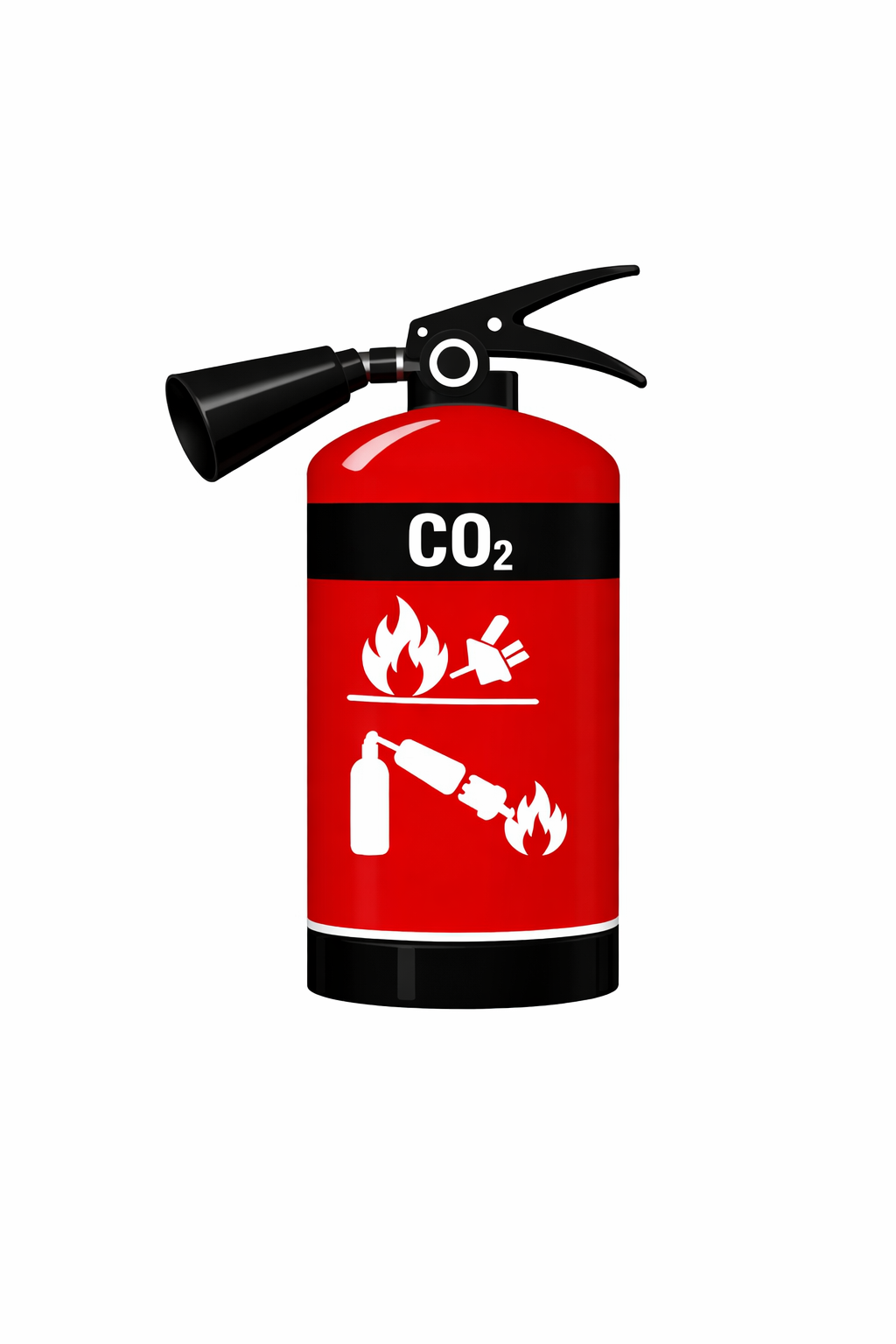
CO2: black label
Electrical and Class B. The one you grab if the site cabin board is on fire or a piece of plant has an electrical fault. Clean. No residue, no mess, doesn't damage circuits. Two things to know: the discharge horn gets extremely cold, never grip it directly or you'll freeze your hand to it; and in a confined space CO2 displaces oxygen, so get out fast once you've used it.
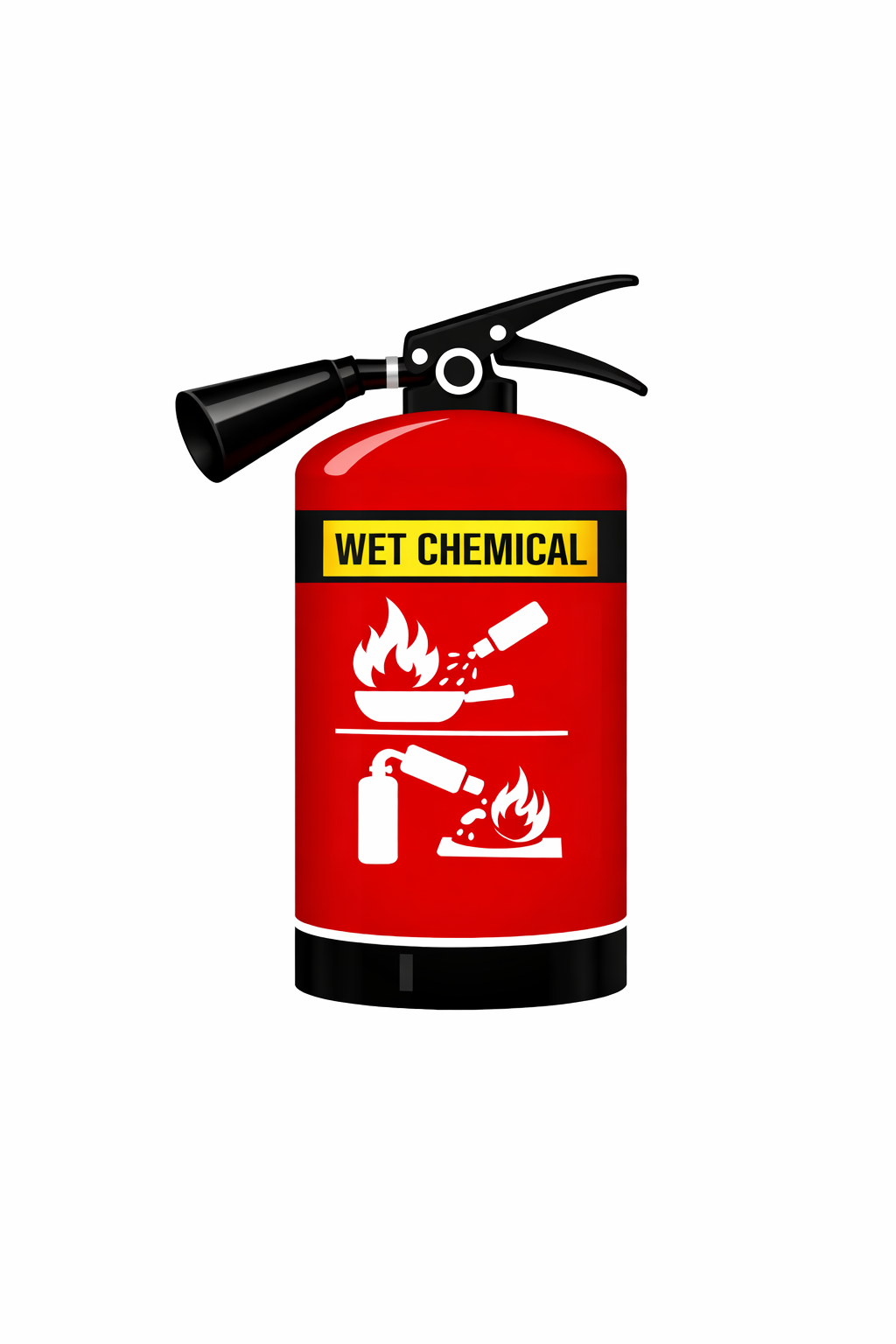
Wet chemical: yellow label
Class F cooking oil fires. Site canteens, welfare units with a deep-fat fryer. Specialist. Most operatives will never touch one. But know where it lives and that it's the only one you use on a chip pan. Water on chip-pan fire is what every fire-service video shows you not to do.
PASS: the one minute of technique
Pull. Aim. Squeeze. Sweep. Pull the pin out, the tamper seal breaks first time. Aim at the base of the fire, not the flames. Squeeze the handle. Sweep from side to side across the base. Most extinguishers give you 10 to 30 seconds of discharge. You've got one go. If the first one doesn't put it out, the fire's beaten you and it's time to leave.
When NOT to fight it
Bin-sized fire, exit at your back, right extinguisher to hand, you've used one before. Fine. Anything bigger than that, evacuate, raise the alarm, call 999. Specifically: never fight a fire if you can't see the seat of it, if it's between you and the way out, if it's in a gas bottle or fuel container (move away, those can BLEVE), or if it's spreading faster than you can knock it down. The building can be rebuilt. You can't.
What the supervisor should be actively spotting on walk-arounds.
Ask one or two of these at the end. Confirms attention more than a silent nod.
Need site-specific RAMS for the job this talk is about?
A toolbox talk is generic by design. It works on every site. Your RAMS isn't. Briefkit writes a site-specific RAMS for your actual job: the hazards, sequence, PPE, competencies and emergency arrangements that apply to this work, at this address, by this team. £30 per document.
Order a RAMS for £30 →